
After assuring shareholders that Byju's is on a strong footing, Chief Executive Officer Byju Raveendran, after much delay, spoke to employees in a townhall session. In his first-ever address to employees since problems began at Byju's, Raveendran spoke about the resignation of auditors and board members, the Term Loan B dispute, and the future of educational technology (edtech). Raveendran also asked his team to 'rise above the noise' and work with resilience and determination.

'If their allocation to certain segments have become high due to strong returns over the past three-four years, they should rebalance their portfolios and bring them in line with their long-term asset allocation.'
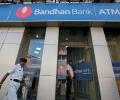
It is 10 years since Bandhan Financial Services became the first microfinance institution (MFI) to receive the universal bank licence. A year later, in 2015, it started operations. Bandhan's entry into banking was seen as a vote of confidence by the Reserve Bank of India (RBI) for the country's microfinance sector. Subsequently, the RBI awarded small finance bank licences to nine MFIs.

ITC highlighted that legal cigarettes account for 9 per cent of tobacco consumption in India, but 80 per cent of tax collection is from tobacco products. While illicit cigarettes account for roughly one-third of the market share, legal cigarette volumes have recovered to around 96 per cent of peak FY13 volumes, after dipping to 70 per cent in FY21.
'The PCA framework was revised and tightened in April 2017, but there was no discussion in any board meeting. The government does not know the rationale behind revising the framework and how the RBI arrived at it. Similarly, there was no discussion in the board meeting on the revised NPA framework,' said an official.

Micro-cap stocks are in the line of fire as market regulator Securities and Exchange Board of India (Sebi) is tightening its noose around investment in small-cap stocks. Given this, analysts suggest investors exit the segment, at least, for the time being. Independent market analyst, Ambareesh Baliga, for instance, said that regulators have gotten worried on the valuation front, though belated, which could prove to be the last straw on the camel's back.

Traditionally, financial institutions have operated risk functions in silos. However, the nature of unknown threats today requires industry participants to work together, says Vikram Limaye.

FMPs remain an option for investors who believe interest rates could head downward over time and wish to lock in the current rates. TMFs have very low expense ratios, which makes them cost-efficient.

IT service company Wipro on Friday reported 7.8 per cent year-on-year decline in its consolidated net profit for the March quarter to about Rs 2834.6 crore, and cautioned that the macroeconomic environment remains "uncertain". The Bengaluru-headquartered company, which recently saw a change of guard with Srinivas Pallia taking over at the helm as the new chief executive officer, has given an IT Services revenue growth guidance in the (-)1.5 per cent to +0.5 per cent band for June quarter on a constant currency basis.

BCCI could earn USD 1.15 billion in revenue share from the ICC during the next five-year cycle.

Amid intense scrutiny from short-sellers and regulators, Adani group stocks have seen a significant shift in their shareholder base: Relatively opaque foreign portfolio investors (FPIs) have given way to more recognisable investors and broad-based funds. The list of large public shareholders - those directly holding at least 1 per cent - is now dominated by entities, such as the state-owned Life Insurance Corporation (LIC), US-based GQG Partners, Abu Dhabi-based International Holding Company, and Qatar Investment Authority's INQ Holding.

rediffGURU R P Yadav offers career advice on how you can improve your core skills and make the most of your talent at the workplace.

The BSE Realty index on Monday soared 4.3 per cent-most among the 19-sectoral sub-indices-buoyed by the proposal to formalise fractional ownership of real estate in the country. The Securities and Exchange Board of India (Sebi) on Friday issued a discussion paper proposing to regulate online platforms offering fractional ownership in real estate, a model already popular in countries such as the United States and UAE.

When its founder, Raghunandan Kamath, took a calculated risk, his Bollywood customers backed him all the way, say Rohith Potti and Pooja Bhula.
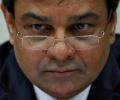
Under Urjit Patel, the then RBI Governor, the central bank had a habit of making complete about-turns on various issues, including electoral bonds and digital payments, former finance secretary Subash Chandra Garg said in his book titled 'We Also Make Policy: An Insider's Account of How the Finance Ministry Functions.' Citing some instances of about-turns by the then RBI Governor Patel, Garg in his book said, RBI had done so on the electoral bond issue and it had so in case of setting up of Payments Regulatory Board (PRB). RBI also made unilateral decisions like ordering complete data localization for participation in the payment system, Garg wrote in the book which will hit the stands on October 1.

Polycab India, Power Finance Corporation, Shriram Finance, and Union Bank of India appear poised to transition from the mid-cap to the large-cap category within the domestic mutual fund industry. Their market capitalisation (m-cap) now ranks among the top 100, which is the threshold for the large-cap universe defined by the Securities and Exchange Board of India.

The 2023-24 (FY24) July-September quarter (second quarter, or Q2) proved to be a mixed period for asset management companies (AMCs). While the two largest listed AMCs, HDFC and Nippon, reported robust growth in both revenue and profits, the other two, Aditya Birla Sun Life and UTI, experienced profit declines. HDFC AMC reported an 18 per cent year-on-year increase in Q2 revenue to Rs 765 crore, while Nippon's revenue rose 15 per cent to Rs 475 crore.

Those who cannot bear significant downturns (as much as 40 per cent) or have a short horizon should exit entirely.

Siemens reported solid results in the July-September quarter (fourth quarter, or Q4) of 2022-23 (FY23), with the top line growing 25 per cent year-on-year (Y-o-Y) to Rs 5,808 crore. The operating profit margin stood at 12.1 per cent, led by lower employee costs and other operating expenses. The company follows the October-September financial year.

Earlier this year, the Union Cabinet gave the management of state-run companies the freedom to decide on divesting their subsidiaries. However, the very next day a meeting was held at the top level of the Government of India, for the presentation of proposals for more autonomy for state-run companies. Interestingly, no chiefs of any of these companies were invited. It is a problem that will stare the government in the face with the state-owned banks too, as talks have again begun for inviting strategic investments in these companies.
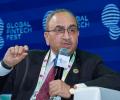
'We have a plan to plough back a 'This year in the first half we had profits of more than Rs 31,000 crore.' significant amount of profits this financial year.' 'We have seen this organic plough back of profit is one of best ways to support the equity of the bank.'

Tightening Initial Public Offering (IPO) norms, capital markets regulator Sebi on Friday cleared the proposal mandating the issuers to disclose the offer price based on past transactions and fund raising activities. In addition, the board of Sebi approved a proposal introducing an alternative mechanism by permitting "pre-filing" of offer documents for companies contemplating IPOs. Under this, an issuer should make "pre-filing" of offer documents with Sebi and stock exchanges without making it available to the public for an initial scrutiny period only.
Companies, which missed out on listing earlier, are giving it another shot but with significantly-reduced issue sizes. In the recent past, companies such as TVS Supply Chain Solutions, Suraj Estate Developers, and ESAF Small Finance Bank have re-filed their draft red herring prospectuses (DRHPs) with the Securities and Exchange Board of India (Sebi). This came after they slashed their issue sizes by 20-60 per cent.

The shift to a shorter T+3 settlement cycle for initial public offerings (IPOs) will be a big test of the domestic market structure, requiring players in the ecosystem to work harder to meet the squeezed timelines, according to industry insiders. The Securities and Exchange Board of India (Sebi), has announced that the transition to the T+3 cycle will be voluntary starting next month and mandatory from December 1. The new mechanism will necessitate quicker confirmations from banks and speedy verification of permanent account numbers (PANs) for all applicants.

Govt reconstitutes body, says will not interfere in senior PSB appointments

These plans are best suited for individuals with a lower risk appetite as they provide guaranteed benefits.

Nepal's macroeconomic performance has been held back by the earthquakes and the recent unrest and disruptions to transportation and trade routes following the promulgation of a new constitution, the IMF said has said.

Recently, Sebi has revised the Code of Corporate Governance for listed companies significantly. Most revisions are in sync with the provisions in the Companies Act 2013, though some norms are stricter than those in the Companies Act 2013.

Sharma to step down as Axis Bank chief on December 31.

Bajaj Auto's market capitalisation (market cap) hit Rs 2 trillion mark for the first time. The stock of the two and three-wheeler major rallied 6 per cent to hit a new high of Rs 7,420 on the BSE in Tuesday's (January 9) intraday trade after its board approved Rs 4,000 crore share buyback at Rs 10,000 per share. The stock ended the day at Rs 7,093.75, up 1.55 per cent and its market cap a shade above Rs 2 trillion.

The business will also see a change of guard. Shailesh Chandra, president of EV and corporate strategy, will replace Mayank Pareek as president of PV business, including EV, with effect from April 1. Pareek will be superannuating from the company after a six-year stint at the end of February 2021. Chandra and Pareek will work on transition over the next few weeks.

India's economic image is not affected due to Adani Group's recent decision to pull out Rs 20,000 crore FPO (follow-on public offers) amid allegations of financial wrongdoings, Finance Minister Nirmala Sitharaman said on Saturday.

News of all that transpired on and off the football field.

'Investors don't have to worry about underperformance in passive funds, which earn market-equivalent returns.'

The party was trounced in Rajasthan, Madhya Pradesh and Chhattisgarh and is now left with only Himachal Pradesh in the north. It is ruling in only three states on its own and is in power in Bihar and Jharkhand as a junior partner in alliance with regional parties.

Deepa Gahlot picks 10 Web series that was worth the viewer's while.

If Cyrus's protestations of having no knowledge of his imminent dismissal are to be taken at face value, he was extraordinarily naive and insulated from the ground reality. There were enough straws in the wind to suggest that his relations with Ratan were fast deteriorating to a point of no return.

'Non-par plans returns are not market-linked. Hence, they can offer guaranteed returns.'

Here's a look at how key Tata group companies fared under Cyrus Mistry's stewardship.

The World Bank has approved loans totalling $1.75 billion (about Rs 13,834.54 crore) to fund India's PM Ayushman Bharat scheme and private investment to boost the economic growth. Of the total loan, $1 billion will go towards the health sector, while the rest $750 million will be in the form of development policy loan (DPL) to fill the financing gaps through private sector investment in the economy. The World Bank Board of Executive Directors approved two complementary loans of $500 million each to support and enhance India's health sector.
